

It is a common sight in pantries, basements, and emergency prep kits: a sealed, unopened plastic water bottle left untouched for years, now visibly shrunken, partially collapsed, and containing less water than when it left the factory.
While water ($H_2O$) itself is a remarkably stable chemical compound that does not rot or ferment, its plastic packaging lives on a dynamic timeline. Understanding why sealed plastic bottles lose volume over time involves looking closely at polymer physics, environmental pressure differentials, and material degradation.
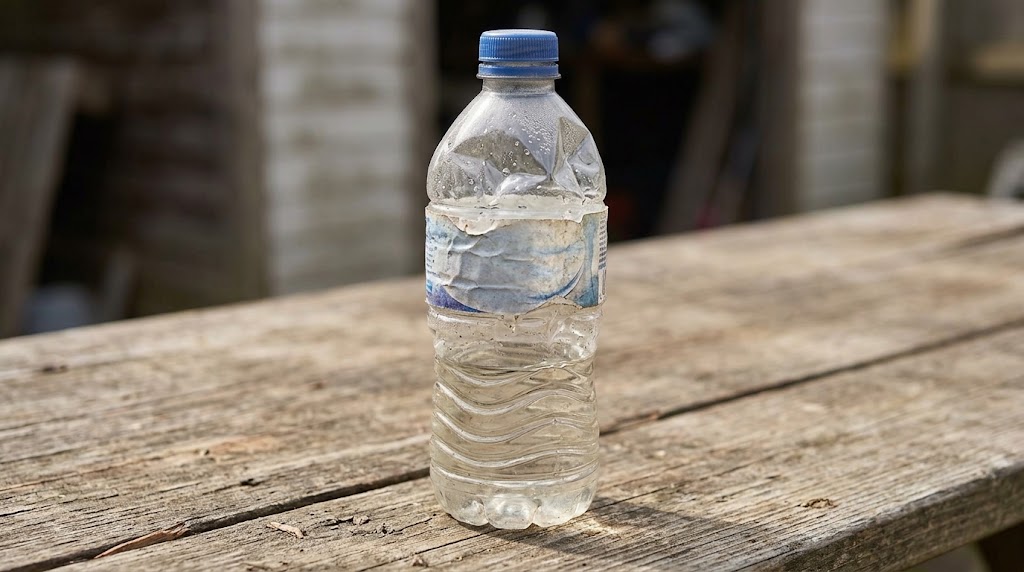
1. Primary Reasons for Water Loss and Bottle Shrinkage
A. Vapor Permeation Through PET Plastics
The vast majority of single-serve disposable water bottles are crafted from Polyethylene Terephthalate (PET or PETE). While PET is an excellent barrier against oxygen, it is relatively permeable to water vapor.
-
Polar Intermolecular Attraction: PET is a polar polymer. Because water molecules are also highly polar, water molecules slowly dissolve into and diffuse through the microscopic intermolecular gaps within the PET polymer chain.
-
Partial Pressure Differential: Liquid loss through permeation is driven by relative humidity and partial pressure differences across the bottle wall—not total air pressure. The inside of a sealed bottle maintains 100% relative humidity (saturation). In typical ambient environments (40%–60% relative humidity), water vapor molecules continuously pass outward through the thin walls of the bottle.
-
Asymmetric Permeability (Why Bottles Shrink): Nitrogen and oxygen—the main constituents of air—have vastly lower permeability coefficients through PET compared to water vapor. Because water vapor escapes outward far faster than ambient air can permeate inward to replace the lost volume, a partial vacuum develops inside. External atmospheric pressure then forces the thin walls to crush inward, causing the bottle to shrink and collapse [cite: https://physics.stackexchange.com/questions/873467/why-do-single-serve-plastic-water-bottles-shrink-over-many-years, https://www.oberk.com/packaging-crash-course/plastic-bottle-paneling-5-causes-and-the-cures].
B. Structural Paneling and Pressure Shifts
Beyond permeation, packaging engineers recognize several structural phenomena known as paneling—where internal pressure drops relative to ambient atmospheric pressure:
-
Thermal Contraction: When liquid or headspace gas inside a bottle cools after hot-filling or exposure to high temperatures, the internal gas contracts, drawing the plastic walls inward.
-
Headspace Oxygen Absorption: Residual oxygen trapped in the neck space can react with or absorb into bottle contents or materials, reducing internal gas volume.
-
Environmental and Altitude Changes: Moving bottles packaged at lower elevations (higher atmospheric pressure) to higher altitudes or experiencing fluctuating storage temperatures accelerates pressure imbalances across container walls.
2. Potential Dangers and Quality Risks
While drinking water slightly past its printed "best-by" date is generally not immediately fatal, stored water that has undergone significant volume loss poses several health, sensory, and structural risks:
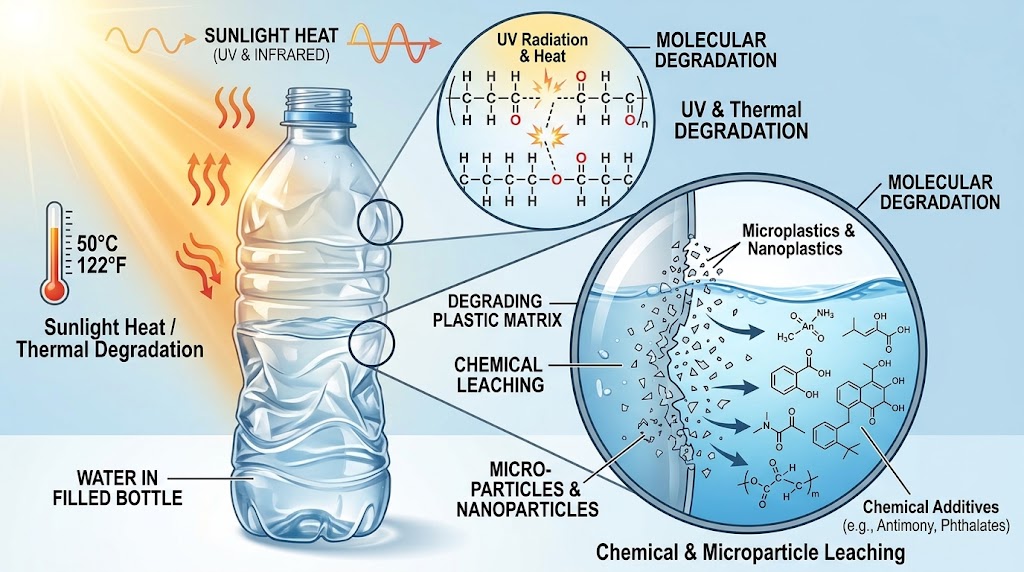
A. Chemical Leaching and Taste Alteration
As PET plastic ages—especially when exposed to direct sunlight, UV rays, or elevated temperatures (such as inside hot cars or warm garages)—the polymer structure begins to break down.
-
Leaching of Additives: Degradation can cause residual additives, trace antimony, and plastic degradation byproducts to leach into the remaining water.
-
Off-Flavors and Odors: Water stored in deteriorating plastic acquires a stale, metallic, or distinctly synthetic plastic taste and smell.
B. Micro-Cracking and Ingress of External Contaminants
Extreme storage conditions—such as repeated freeze-thaw cycles or mechanical stress on deflating bottles—cause micro-fractures in the plastic matrix or compromise the cap seal. Once the hermetic seal or physical barrier fails, environmental contaminants, volatile organic compounds (VOCs) from nearby chemicals, or microorganisms can gain entry, rendering the water unsafe to consume.
C. Environmental and Ecological Hazards
A major secondary danger of aging bottled water stock is environmental degradation. Millions of degraded, single-use plastic bottles end up in landfills or aquatic ecosystems where they take hundreds of years to decompose, breaking down into microplastics that enter the global food chain.
Summary Table: Factors Causing Water Loss vs. Recommended Mitigation
| Phenomenon / Cause | Mechanism | Mitigation / Best Practices |
| Water Vapor Permeation | Water molecules slowly diffuse through polar PET walls driven by internal humidity [cite: https://physics.stackexchange.com/questions/873467/why-do-single-serve-plastic-water-bottles-shrink-over-many-years, https://www.oberk.com/packaging-crash-course/plastic-bottle-paneling-5-causes-and-the-cures]. | Store in cool, dark, temperature-controlled spaces; use glass or aluminum for multi-year storage. |
| Structural Paneling | Pressure drop inside container causes walls to buckle inward. | Utilize rigid bottle geometry (ribbing/vacuum panels) and proper headspace filling. |
| Plastic Leaching | Heat and UV break down PET chains, releasing trace chemicals. | Avoid storing plastic water bottles in cars, direct sunlight, or near high heat sources. |
| Seal Integrity Loss | Freeze-thaw expansion or cap degradation permits microbial ingress. | Inspect old stock for leaks, abnormal odor, or cloudiness before drinking. |
Reader Comments (0)
Want to leave a comment? Sign in with your account to participate.
Sign In to CommentNo comments yet. Be the first to join the conversation!