

It is a familiar late-night routine: you settle into bed, prop up your pillows, hold your smartphone above your face, and start scrolling through news, social media, or a chapter of a book. But after 10 or 15 minutes, a strange prickling sensation begins in your hands. Soon, your fingers feel numb, heavy, or completely "asleep"—forcing you to shake out your arms or flop them onto the mattress until the feeling slowly creeps back.
Known medically as nocturnal paresthesia, this "pins and needles" sensation is extremely common. While it can feel alarming to wake up or lie in bed with limbs that feel like dead weight, the explanation almost always comes down to simple biomechanics, nerve pathway compression, and blood flow restriction.
The Biomechanics of the Bedtime Scroll
Nerves need two critical conditions to work properly: adequate physical space and uninterrupted blood flow. When you lie down and hold a smartphone above your face, you unknowingly subject the primary nerves running down your arm to sustained tension and pressure.
Several key factors contribute to this phenomenon:
1. The Bent Elbow (Cubital Tunnel Strain)
To hold a phone in front of your face while lying down, your elbows must stay bent at a sharp, sustained angle—often 90 degrees or greater.
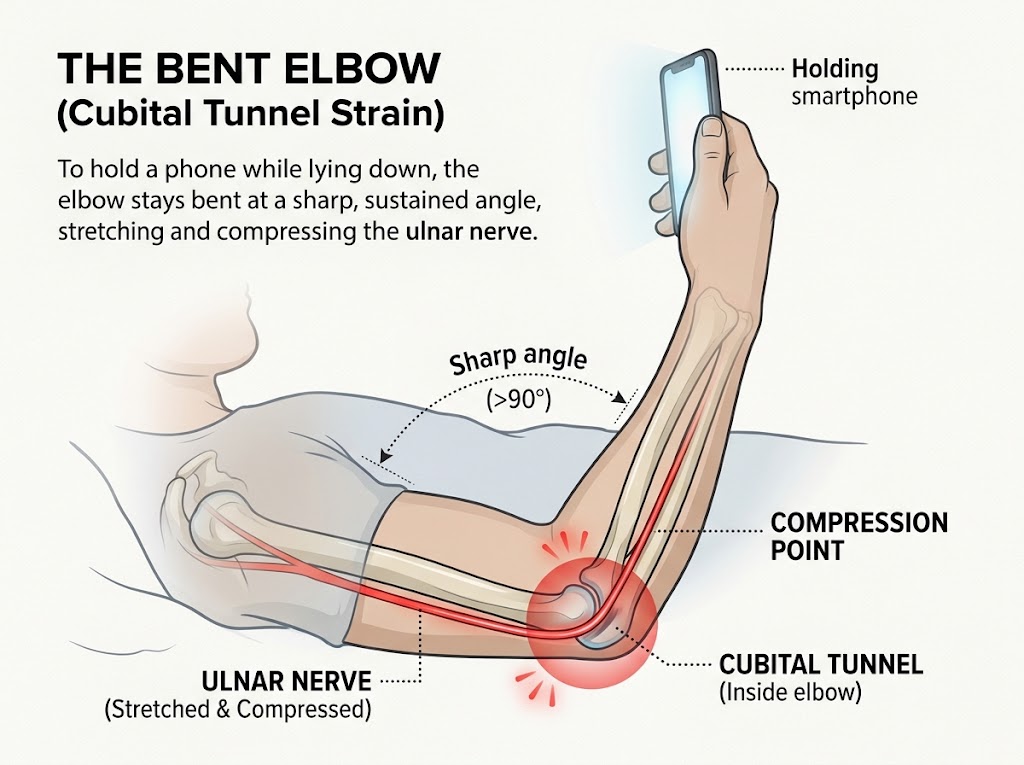
Running through a narrow bony groove on the inside of your elbow is the ulnar nerve (commonly known as the "funny bone" nerve). Bending your elbow stretches the ulnar nerve across the bone like a rubber band and tightens the cubital tunnel surrounding it. Keeping your elbows flexed for extended periods restricts blood flow to the nerve, leading to cubital tunnel compression.
2. Flexed Wrists (Carpal Tunnel Pressure)
Holding the weight of a phone requires your wrists to stay flexed forward or extended back in an unnatural, rigid posture.
The median nerve travels through a narrow passageway on the palm side of your wrist called the carpal tunnel. When your wrist remains bent while gripping or scrolling, pressure inside the carpal tunnel increases dramatically. This compresses the median nerve and inflamed surrounding tendons, triggering classic carpal tunnel symptoms.
3. Elevated Arms and Gravity
Holding your hands elevated above your chest against gravity reduces arterial blood pressure in your forearms and hands while putting additional strain on the nerves traveling through your shoulders and thoracic outlet. The combined lack of movement and static posture prevents normal circulation, speeding up the onset of numbness.
Decoding Your Numbness: Which Nerve Is Involved?
Not all hand numbness is the same. Medical experts note that which specific fingers go numb acts as a clear roadmap to which nerve is being pinched or stretched:
-
Ring Finger & Pinky Finger (Ulnar Nerve / Cubital Tunnel): If the numbness hits your little finger and the outer half of your ring finger, the issue is coming from your flexed elbow. This is the most frequent culprit during phone use because keeping the elbows bent stretches the ulnar nerve.
-
Thumb, Index, Middle & Half of Ring Finger (Median Nerve / Carpal Tunnel): If your thumb, pointer, and middle fingers feel prickly or numb, the median nerve at your wrist is compressed. Shaking your hand out often temporarily relieves this pressure.
-
The Entire Hand or Whole Arm: If your entire hand goes numb regardless of finger pattern, it may be due to general postural compression (such as resting the arm under a head or pillow) or a nerve root irritation higher up in the cervical spine (neck).
Is Smartphone Use Causing Permanent Carpal Tunnel?
Many people worry that getting "pins and needles" while reading on their phone means they have developed permanent Carpal Tunnel Syndrome or nerve damage.
While occasional, short-term numbness that goes away shortly after changing positions is harmless positional paresthesia, repetitive smartphone use can aggravate underlying nerve conditions. Constant texting, rigid gripping, and prolonged scrolling strain the tendons that share space with the median nerve inside the wrist. Over time, this repetitive stress combined with awkward sleep postures can convert temporary nighttime numbness into daytime hand weakness, diminished grip strength, or persistent pain.
How to Prevent Your Arms from Falling Asleep
You don't necessarily have to abandon your night reading habits, but making a few ergonomic tweaks can significantly protect your nerves and improve circulation:
-
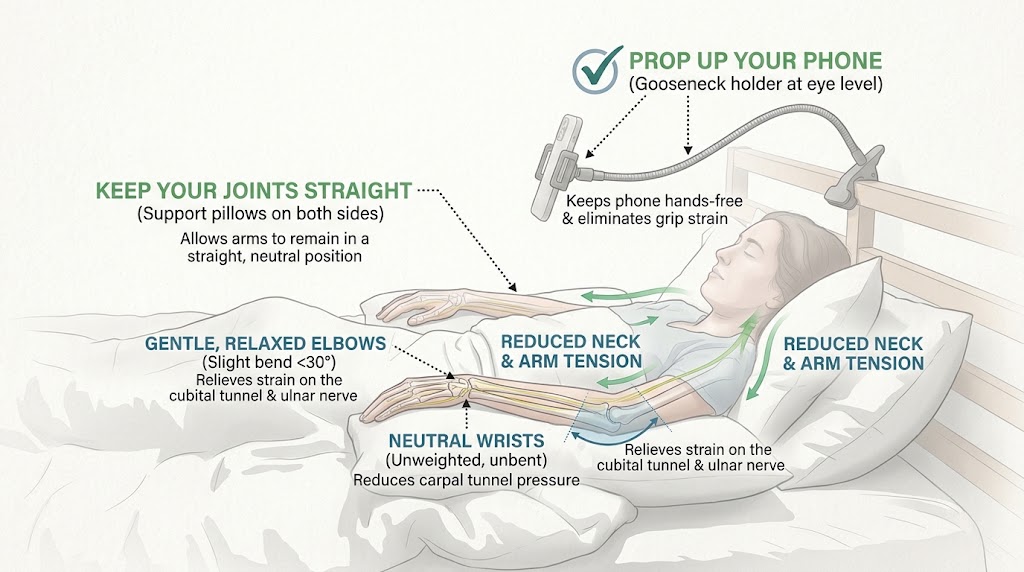
Keep Your Joints Straight: Avoid holding your elbows at sharp angles. Try resting your elbows on a pillow beside you so your arms remain in a straighter, more neutral position.
-
Prop Up Your Phone: Use a reading pillow, phone stand, or gooseneck holder attached to your headboard to hold the phone's weight at eye level, eliminating the need to grip and elevate your hands.
-
Switch to Back-Sleeping: Prone (stomach) and side-sleeping positions tend to force hands into curled positions beneath pillows or bodies. Sleeping flat on your back with arms relaxed at your sides is the optimal posture for nerve health.
-
Take 20-30 Minute Breaks: Set down the phone every 20 minutes to shake out your hands, perform gentle wrist flexor stretches, and stretch out your elbows.
-
Consider Night Splints: If wrist flexing is an unmanageable habit during rest, a simple neutral wrist brace (cock-up splint) can prevent your wrists from curling overnight and dramatically reduce nighttime carpal tunnel flare-ups.
When to See a Doctor
Occasional numbness that clears up within a minute or two of moving your arm is generally nothing to worry about. However, medical specialists recommend consulting a hand and wrist expert or neurologist if you experience:
-
Numbness or tingling that persists well into the daytime or during normal daily activities (such as driving or typing).
-
Progressive hand weakness, dropping items frequently, or loss of fine motor skills (like buttoning a shirt).
-
Visible thinning or loss of muscle at the base of the thumb or between fingers.
-
Pain radiating from the neck down into the shoulder and arm.
Reader Comments (0)
Want to leave a comment? Sign in with your account to participate.
Sign In to CommentNo comments yet. Be the first to join the conversation!