

Self-discipline is often misunderstood as raw willpower—a relentless, grim determination to force oneself into compliance through brute mental force. Yet brute force inevitably exhausts itself. Sustainable self-discipline is fundamentally a byproduct of two things: radical self-awareness and absolute clarity of purpose. When we lack self-awareness, our unexamined instincts subtly sabotage our best intentions; when we lack a worthy destination, our effort scatters into exhaustion without impact.
Developing genuine mastery over yourself requires moving beyond rigid rules to examine the architecture of your habits, the truth of your daily choices, and the validity of where you are actually heading.
Defining a Worthy Destination
Discipline cannot operate in a vacuum. Former Navy SEAL Brent Gleeson notes that without a clear vision of what success means, it is impossible to set priorities—and "having ten priorities translates to having no priorities". When your destination is vague, every minor distraction appears equally valid.
A destination is not merely an ambitious wish, a financial figure, or an external milestone adopted to impress others. To command the sustained effort that real discipline demands, a goal must meet rigorous conditions:
-
Intrinsic Coherence: The goal must align with your authentic values rather than social conditioning or external vanity. If the destination doesn't matter deeply to your internal sense of identity, your mind will abandon the effort the moment discomfort strikes.
-
High Opportunity-Cost Justification: Every meaningful pursuit requires trade-offs—sleep, leisure, instant gratification, or alternative opportunities. A worthy destination offers a return significant enough that you actively accept what you must sacrifice to reach it.
-
Process Compatibility: Leo Babauta of Zen Habits observes that if you despise the day-to-day practice of a habit, you cannot sustain it on willpower alone. A worthy destination is one where the daily process—not just the final victory—carries intrinsic value or purpose.
-
Character Compounding: A destination worth your time does not merely deliver an outcome; it shapes the person you become along the path. As coach Eugene L. Roberts once noted, a person’s true character is not revealed during formal work hours, but in their idle time—where they go, what companions they seek, and what they do when they are free to choose. A worthy goal demands that your discretionary choices elevate your character rather than erode it.

The Blindspots: Hidden Patterns That Sabotage Discipline
Most failures of discipline do not occur in moments of dramatic crisis. They occur in quiet, unnoticed compromises. When we fail to practice deep introspection, three invisible patterns take over:
1. The Emotional Blindspot
Rigid discipline plans often ignore the internal emotional climate. When you commit to a strict regimen—waking up at 5:00 AM, writing for two hours, or sticking to a clean diet—unacknowledged emotions such as dread, performance anxiety, or loneliness generate hidden friction.
Emotions are not obstacles to overcome; they are diagnostic signals. When resistance appears, brute force will fail. Introspection allows you to ask: What feeling am I actually running from when I reach for a distraction? Addressing the underlying anxiety or fatigue dissolves the resistance before it breaks your resolve.
2. Biological and Energy Misalignment
Discipline frequently crumbles because individuals try to fight basic human biology. Forcing deep analytical focus during your natural post-lunch dip, or forcing creative work when your circadian rhythm is sluggish, produces low-quality output and emotional frustration. Sustainable discipline aligns high-cognitive tasks with natural peak energy windows, treating physical rest and recovery not as lapses in discipline, but as operational necessities.
3. The Seduction of Self-Rationalization
Babauta points out that our minds are remarkably adept at lying to us in the moment of temptation. Thoughts like "Just this once," "I worked hard today, I deserve this," or "I’ll start fresh on Monday" sound entirely logical when uttered. Unchecked, these rationalizations become recurring patterns that quietly derail progress.
Don't Drop the Ball: The Cost of Casual Lapses
In his landmark 1994 address "Don’t Drop the Ball," Gordon B. Hinckley drew on the cautionary tale of center fielder Fred Snodgrass, whose single muffed fly ball in the tenth inning of the 1912 World Series handed victory to his opponents. It wasn't malice or lack of ability that cost him the game; it was a split-second lapse in alertness on a routine play.
Hinckley underscored that our greatest failures rarely arise from grand, deliberate betrayals. They happen when we lower our guard, misuse our idle time, and permit "small decisions" to compromise long-term integrity. In football, a player who scoops up a fumble and runs the wrong way may mistakenly believe the roar of the crowd is cheering him on, when they are actually bemoaning his disaster. Without active introspection, we often sprint full-speed down paths of empty validation, only to realize we have scored for the wrong side.
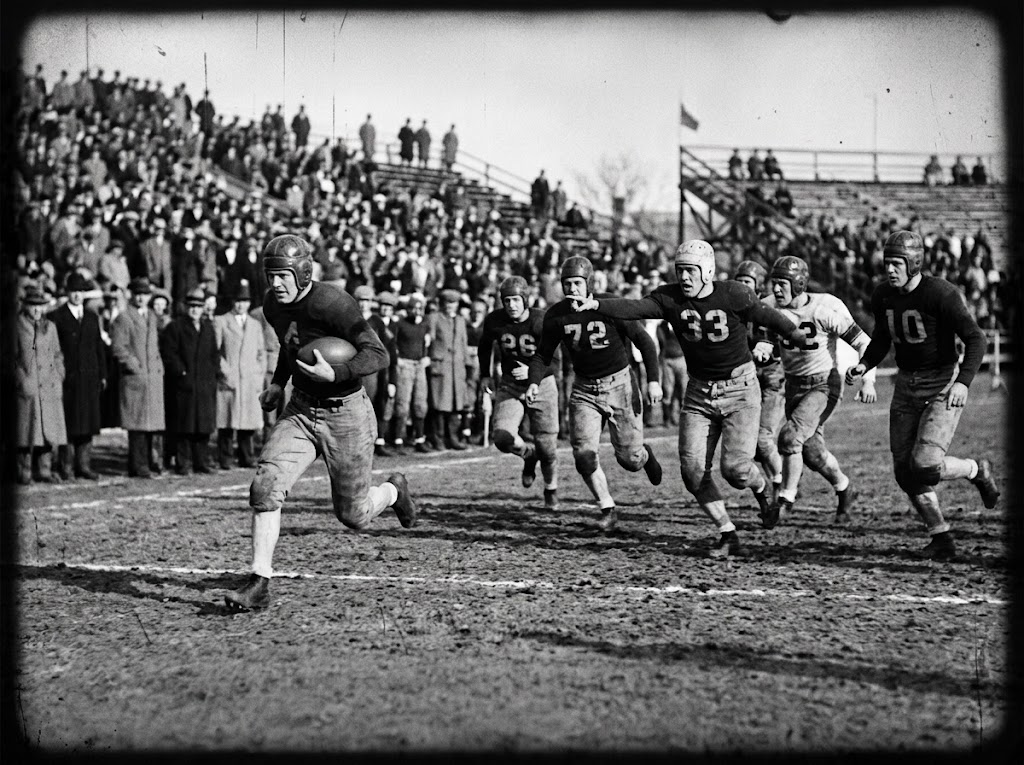
Vigilance is not paranoia; it is an ongoing awareness of the baseline standards you have set for yourself. When a lapse occurs, acknowledgment and course-correction must be immediate, before a temporary fumble becomes an entrenched habit.
Daily Practices for Radical Self-Awareness
Discipline is not a trait you either possess or lack; it is a feedback loop maintained through continuous observation. Integrating these reflective habits protects your trajectory:
-
Audit Idle Hours: Conduct an honest inventory of your unstructured time. The habits you indulge in when "no one is looking" and "nothing is required" reveal the true vector of your life. Notice the defaults you retreat to when bored or tired.
-
Strip the Environment of Friction: As Gleeson emphasizes, relying on willpower while surrounded by cues for indulgence is a losing strategy. Remove digital triggers, silence interruptions, and eliminate immediate physical temptations so discipline becomes the default path of least resistance.
-
Catch Rationalizations in Real Time: When you feel the urge to deviate from your intended plan, pause for 60 seconds. Write down the exact phrase your mind is using to justify quitting. Naming the rationalization robs it of its power.
-
Hold an Evening Reckoning: Spend three minutes at the close of each day answering three concrete questions:
-
Where did I direct my attention during my unscripted hours?
-
What emotion caused me to hesitate or seek distraction?
-
Did my actions today move me closer to my defined destination, or did I run the wrong way?
-
Self-discipline is ultimately an act of profound self-respect. It is the conscious refusal to let impulsive whims, unexamined emotional triggers, or passive drift steer your life away from the destination you chose with clear eyes.
Reader Comments (0)
Want to leave a comment? Sign in with your account to participate.
Sign In to CommentNo comments yet. Be the first to join the conversation!