

We stand at the edge of an electric frontier, peering at the humming monoliths of modern data centers with a strange, historically familiar dread. Across town halls, editorial pages, and dinner tables, a quiet resistance is hardening against Artificial Intelligence. Critics point to the immense energy required to train these models and fear the obsolescence of human labor, demanding we pump the brakes on the very intelligence we have spent centuries trying to build. Yet, looking through the lens of history and economic truth, this opposition is a profound contradiction to the very nature of human advancement. To resist AI is to misunderstand how humanity actually grows.
In 1865, the English economist William Stanley Jevons observed something that defied common sense. As James Watt’s steam engine made coal consumption drastically more efficient, coal usage did not decline—it skyrocketed. This phenomenon, known as Jevons Paradox, reveals a fundamental law of human ambition: when a resource becomes cheaper, faster, and more efficient to use, we do not simply do the same amount of work with fewer people. Instead, we expand our imagination, invent entirely new industries, and demand vastly more of that resource to build things previously considered impossible.
Applying Jevons Paradox to Super Intelligence turns the modern fear of replacement upside down. When cognitive labor, code, synthesis, and analysis become exponentially more efficient through AI, humanity will not shrink into irrelevance; we will experience an explosion of creative and economic demand. Solving one problem effortlessly simply unlocks ten deeper, more complex problems that require human judgment, empathy, and vision to navigate. Far from eliminating the need for people, hyper-efficient intelligence demands more engaged, enhanced humans at the helm—translating raw computational power into meaning, ethics, and art.
History consistently rewards the explorers who lean into new tools while leaving the connoisseurs of complacency in the footnotes. Consider the arrival of the Gutenberg printing press in the 15th century. The guild scribes of Europe vehemently opposed movable type, arguing it would destroy the sacred, artisanal craft of hand-copying manuscripts and throw thousands out of work. Yet, by making the written word vastly more efficient to produce, the press did not kill human literacy or writing—it ignited the Renaissance and the Scientific Revolution. Suddenly, the world needed exponentially more authors, editors, teachers, translators, and thinkers to fill a hunger for knowledge that had been starved by scarcity.
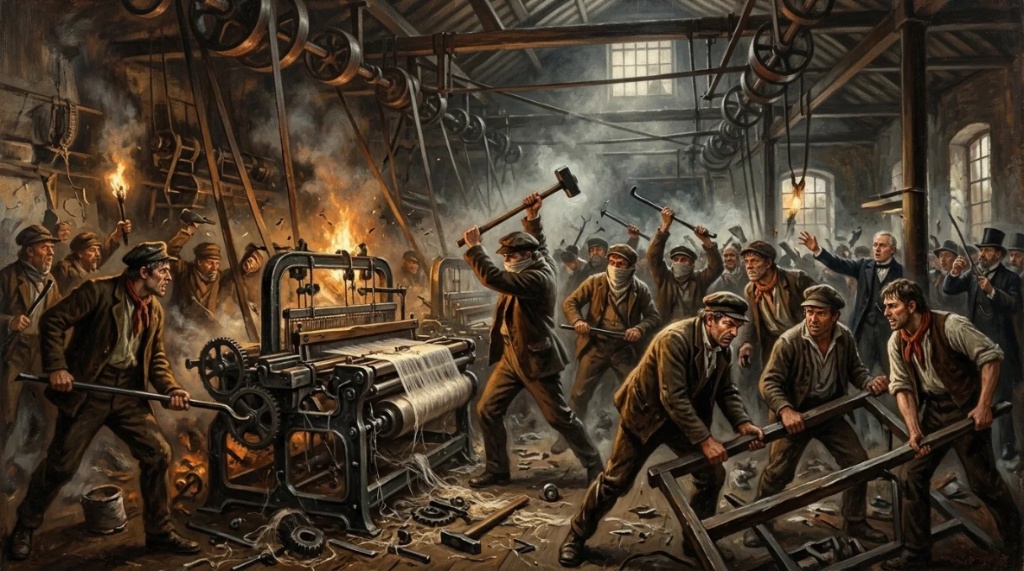
The same pattern repeated during the Industrial Revolution and the birth of the electrical grid. When factories first began electrifying and automating textile looms, the Luddites smashed the machines to protect traditional ways of life. Those traditions offered the comfort of familiarity, yet clinging to them would have kept humanity tethered to subsistence living. Instead, the mastery of steam and electricity did not hollow out society; it birthed modern medicine, global logistics, aerospace, and telecommunications—creating millions of roles requiring higher cognitive skill, emotional intelligence, and collaborative ingenuity than a hand-loom ever could.
Even in the dawn of personal computing and spreadsheets, accountants and clerical workers feared the silicon chip would render human number-crunchers obsolete. Instead, VisiCalc and Excel triggered Jevons Paradox in finance and strategy. Once basic arithmetic took milliseconds, businesses did not fire their analysts; they hired armies of financial strategists, data scientists, and product designers to ask deeper questions about markets, human behavior, and future growth.
At its core, human culture has never been pushed forward by those who romanticize stagnation. Old-fashioned traditions give us roots, nostalgia, and comfort, but they have never built a single bridge across an ocean or cured a single disease. Every leap in the human condition came from the restless pioneers settling uncharted territories, the inventors sketching impossible machines by candlelight, and the poets staring into the unknown to articulate what it means to be alive.
The coal miners of the 19th century powered the engines that lifted billions out of poverty; today, the engineers, builders, and everyday explorers harnessing AI are mining a new kind of cognitive energy. Data centers are not monuments to human obsolescence—they are the foundries of our next renaissance. When we offload the mechanical weight of routine thought onto silicon, we reclaim our bandwidth for what machines can never replicate: genuine human emotion, moral courage, relational warmth, and audacious dreaming.
To sit on the sidelines and oppose AI out of fear is to choose complacency over curiosity. The tools are already in our hands. Our task is not to retreat into the comfort of yesterday’s habits, nor to treat human potential as a finite pie that shrinks when machines grow smarter. By stepping forward, learning the language of Super Intelligence, and weaving it into our craft, we do not diminish our humanity—we amplify it, becoming sharper, freer, and infinitely more valuable than we have ever been.
Reader Comments (1)
Want to leave a comment? Sign in with your account to participate.
Sign In to Comment